
Unite or conquer?
The ongoing question for the parties of the left

When the Kingdom of Italy was founded in 1861, it raised a sensitive question. It would be euphemistic at best to state that Italy had been “unified”, since large swathes of the country had had to be dragged kicking and screaming into this new constitutional monarchy.
From another perspective, the rest of the peninsula had effectively been forcibly taken over by the Kingdom of Piedmont-Sardinia, which imposed its royal family and governing structures on the rest of the country. But it would hardly be very inspiring to talk about the “conquest of Italy”.
Instead of unification or conquest, Italian historiography speaks of a secret third thing. Italy did not undergo either unification or conquest, but a “resurgence”, risorgimento – drawing on a term already in use to describe the flourishing of Italian art and literature since the late eighteenth century.
Today the French left finds itself with a similar dilemma. In the face of ten years of centre-right governance and the ever-growing threat of the far right, a left-wing resurgence is sorely needed.
But the main left-wing parties are constantly oscillating between the two possible means of achieving this: unite or conquer.
It is certainly a real issue that the left-wing bloc is so fractured. There are four left-wing parties that all consistently poll above 5% – LFI, the PS, the Écologistes, and the Communists.
And a handful of smaller, mostly Trotskyist parties take 0.5-1% in each election – which can be decisive in France’s two-round electoral system, where a tiny margin might make the difference between crashing out in the first round and squeezing through to triumph handily in the second.
None of the other blocs are similarly fragmented. Instead, they tend to follow the same pattern, with a major moderate party and a minor, more extreme one.
Thus Emmanuel Macron’s Ensemble coalition only has to share the centre right with Les Republicains, who are in terminal decline at the national level anyway.
The Rassemblement national, meanwhile, need contend only with Éric Zemmour’s personality cult Reconquête.
While these parties formally compete, in reality their relationship can be symbiotic. LR makes Ensemble seem more moderate than they really are. Zemmour does the same for Marine le Pen.
And by piling on the pressure from the right, the minor parties ensure their more moderate counterparts do not, in their bid to appeal to the centre, stray too far from the positions held by their members.
On the left, La France insoumise (LFI) used (malgré lui) to fulfil this function to some extent for the Parti socialiste (PS). But that equilibrium has broken down.
So the advantages of either a unified platform or a smaller number of competitive parties on the left are obvious. What is less clear is what strategy might get them there – and whether those adopted by the left-wing parties thus far are likely to succeed.
For the most part, they have vacillated between the two options: unite or conquer?
Let’s start with LFI, the biggest and most dynamic party in the left-wing bloc. Its aim is to become the undisputed leader of the left, and at important moments, it has been ready to do so through a unifying strategy.
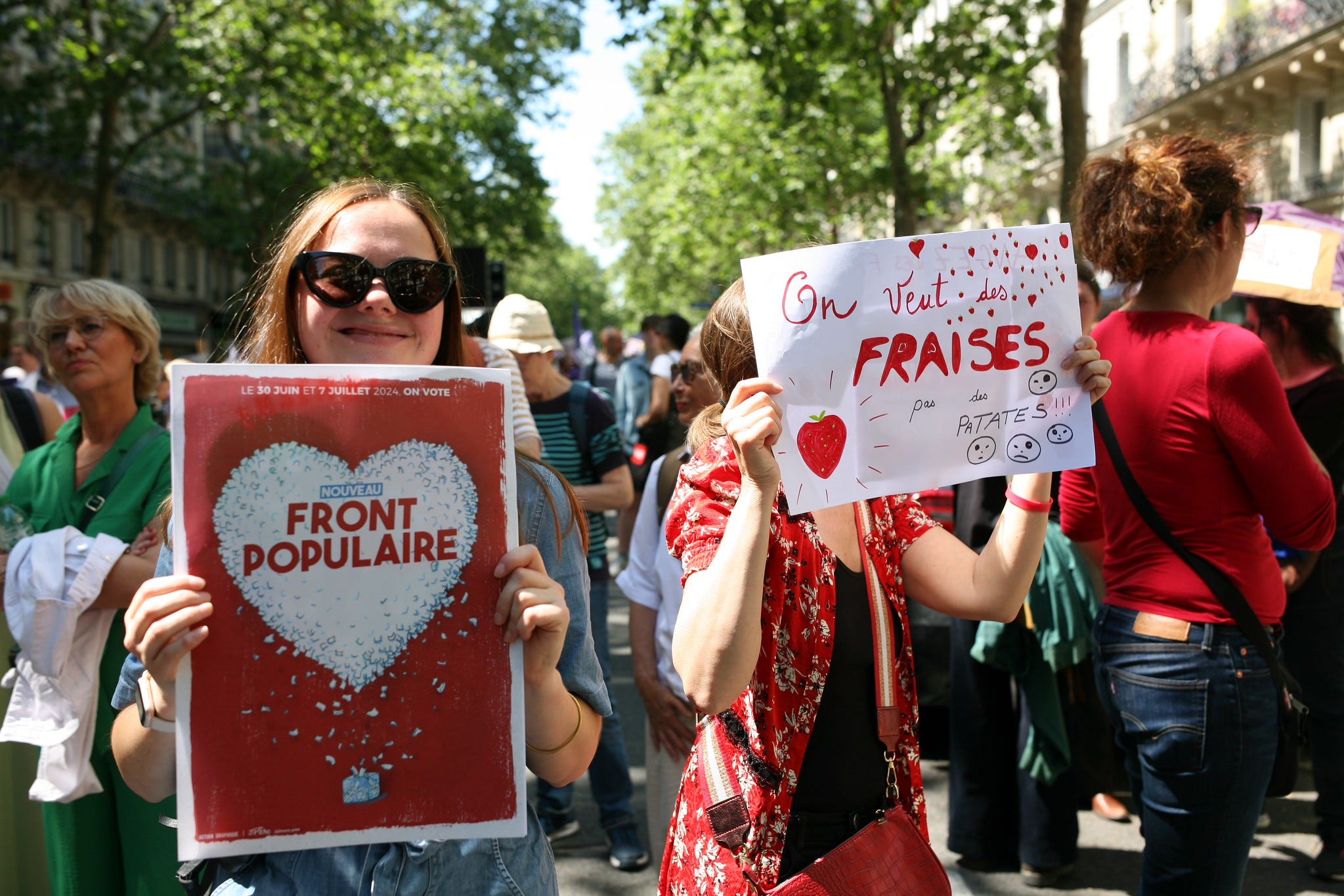
Twice now, it has succeeded in forming electoral alliances with the other mainstream left-wing parties: the NUPES in 2022 and the NFP in 2024.
LFI made substantial concessions for the sake of the unity and electoral success of these alliances: it even promised that if the NFP were allowed to form a government, it would renounce its claim to any ministries, despite its being the largest party under the NFP banner.
Underpinning this was a broader strategic aim: to be the preponderant voice in a movement spanning the left to the centre left. The strongest party in the alliance gets to contest the most seats, which in turns cements its status as the strongest paerty.
For LFI, which consistently polls higher than the other parties of the left, electoral alliances offer the prospect of power through unity.
But both the NUPES and the NFP fell apart shortly after the elections they were formed to contest.

That was not entirely the fault of LFI, but it is true that the instincts of LFI’s leader, Jean-Luc Mélenchon, are not always orientated towards unity.
He believes the LFI can conquer the whole left terrain in French politics through a policy of fracturing: essentially, taking repeated uncompromising stances and challenging the other left-wing parties to respond.
The target is what he calls the quatrième bloc, the “fourth bloc” (the other three being the far-right bloc, the centrist-liberal bloc, and the “popular” bloc of the traditional left): habitual non-voters, disproportionately young, poor, and non-white, who are disillusioned with the system in general.
He estimates that there are 11 million such voters waiting to be won over, and that if they could all be coaxed to the polls, they would tip the balance of French politics decisively in favour of LFI – since those of this profile who do vote tend to back his movement.
The “fourth bloc” plus LFI’s share of the “popular bloc” would make his party unbeatable.
Hence the strategy of fracturing. His thinking is that each time the other parties of the left side against LFI, they are proving to these voters, as well as the wider left, that these parties are not truly aligned with the cause of the left, ready to fight for the interests of the marginalised.
That, in his view, will cause them to abandon the “fake left” parties and flock to LFI instead.
This then should have a multiplier effect. The more of the left LFI succeeds in rallying around its standard, the more it becomes the sole viable left-wing challenger in most races. The electoral system thus begins to work in its favour.
This view also militates against electoral alliances. Mélenchon believes getting too cosy with the centrist parties risks tarnishing LFI’s anti-establishment credentials. A pact with the rest of the left might be expedient in the run-up to an election, but in the long term, they only put these “fourth-bloc” voters off.
LFI has two substantial advantages over the rest of the left in pursuing this conquest strategy.
The first is that, because of its willingness to break republican taboos and criticise the key value of laïcité, a value that in reality often serves to legitimise Islamophobic discrimination, it has been very effective in winning the votes of Muslim citizens – a group that has historically had high rates of voter abstention.
The other left-wing parties have mostly remained married to a vision of French republicanism that, structurally, has become essentially centre-right, and so are suffering in an increasingly multicultural left-wing electorate.
LFI’s other advantage is its ability, as a populist party, to mobilise anti-system sentiment, already rife in France.
These two factors together offer LFI a base far in excess of that which the other left-wing parties can mobilise. Even standing on its own in recent local elections, it held its own in contests where the rest of the left was generally allied against it.
For the same reason, in the current polls for the presidential election next year, Mélenchon, as the candidate of LFI alone, polls well ahead of any single other party.
Mélenchon believes that the key to bringing these voters is to hammer the establishment parties that they despise – which can end up including the rest of the left. If the price of persuading the young and disenfranchised to come to the polls is to bury the NFP forever, he is prepared to pay it.
On the other hand, many centre-left voters now openly despise him and his party. And the nature of the political spectrum means it is harder to corral them into backing him for electoral reasons.
Whereas the harder left sometimes has to hold its nose and opt for the centre left for want of a better option, the reality is that many centre-left voters have few qualms about defecting to the centre right if given a choice between them and Mélenchon, or else about simply abstaining.
That is not such a problem provided the “fourth bloc” actually turns out to vote. But there is no guarantee that they will. Left populists in other countries have not achieved a substantial increase in turnout. So it is a gamble: in looking to expand and command the left, LFI risks shrinking it instead.
Moreover, Mélenchon’s constant efforts at creative destruction, dividing the left in order to unite it behind him, seem to be regarded in the country at large and on the left itself as simple destruction.
Recent polling has found that 64% of respondents thought his aggressiveness was a liability, and 60% said the same of his tendency to provoke controversy. Among those who identified themselves with the left, 52% and 54% identified the same two issues respectively, with a further 51% complaining of his incapacity to unite the left.
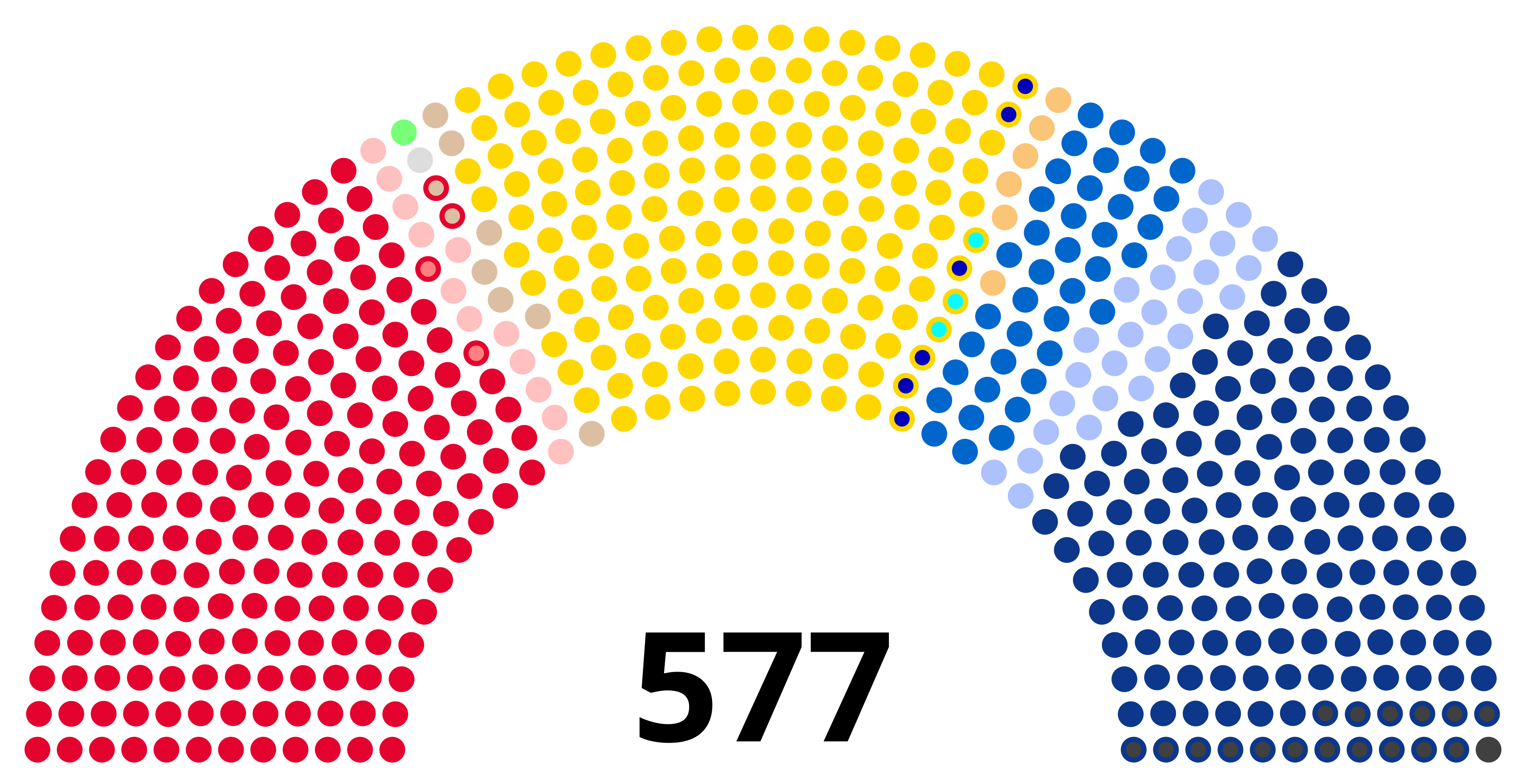
At the other end of the left, the PS faces the same challenges, and has responded with the same hesitation between “unite” and “conquer”.
Until 2017 it was still the dominant force on the left in the country, and its priority is to regain that status.
At times, under its current secretary Olivier Faure, it has been willing to play nice with LFI, recognising that what left-wing voters want above all is for the left to be competitive in elections, which means the best way of winning back credibility in this group is to be a constructive member of the NUPES and then the NFP.
In general, however, its attitude towards LFI is one of rivalry – partly over genuine disagreement on policy issues, but in no small part because the party establishment regards the left-wing movement as an upstart that usurped its rightful place at the head of the French left.
As such, the PS strategy has for the last couple of years been one of conquest through unity: forming alliances of the non-LFI left, i.e. with the Écologistes, Parti communiste (PCF), and Place Publique, a centrist party that is essentially an offshoot of the PS anyway.
Since it polls the highest of these parties and has the strongest local networks – as proven by its resilience in municipal elections – it can be confident of a leadership role.
This alliance of the non-LFI left-wing parties, the theory goes, can squeeze out their left-wing rival, primarily to the benefit of the PS, as its senior partner.
Meanwhile, at key moments, the PS has collaborated with Macron’s centre-right governments, hoping in doing so to prove that unlike LFI, it can actually achieve positive policy outcomes.
The idea is that this will appeal to left-wing voters who, above all, separately from policy disputes, are simply tired of losing – likely the silent majority, now, in the left bloc.
The problem for the PS is that uniting the non-LFI left does not in fact get them very far, since LFI makes up about half of the left in itself. Attacking the populist party and its leader only stokes further resentment and makes it less likely that LFI voters will come back into the centre-left fold.
A significant portion of those voters have proven quite happy to sit out the second round of elections in which their favoured candidate has been eliminated, even when the stakes are at their highest.
In 2022, when Macron became the final bulwark against a far-right France, 41% of those who had voted for Mélenchon in the first round still preferred to abstain rather than back the incumbent – about the same as the 42% who dutifully formed the barrage républicain.
The PS and Macron are not the same, but this is still enough to prove that Mélenchon’s backers will not easily be persuaded to endorse the establishment parties even if the PS-led non-LFI alliance does gain ground over Mélenchon’s outfit.
And long before reaching this point, the PS runs into the same wall as LFI, one whose foundation is really a contradiction within the left itself.
The average left-wing voter, whether she leans towards the centre-left or the hard left, does not want in-fighting, even if it narrowly benefits her favoured party. She wants the left-wing parties to put aside their differences and cooperate.
This notwithstanding, the base of LFI is very sceptical of the PS, and the base of the PS – which is also harassed on this issue from its right by the deeply Mélenchon-hostile PP – is equally unfavourable to the LFI.
So while making overtures to the other might win each one some plaudits in the middle ground of the left, it risks causing discontent in the party faithful – and vice versa.
This means that the overarching incentive is towards unity, but there are immediate penalties for taking steps in its direction. And given the merciless nature of the French electoral system, those immediate penalties can be fatal for the long-term prospects of each party.
The Italian risorgimento came about through a mix of genuine enthusiasm for unity in parts of the country and the suppression of dissent wherever Piedmont-aligned armed forces found it. The résurgence of the French left, if it is to happen, may end up having to proceed through the same mix.