
Two Irishmen in Paris
What French revolutionaries thought about national belonging, and how it still affects French citizenship today

The following is an adapted excerpt from my forthcoming book, Citizens of a New Enlightened Age: The French Revolution and the Idea of Citizenship, due to be published in the summer by De Gruyter Brill. In the chapter from which it is taken, I explain how the idea of national belonging changed in the course of the revolutionary and Napoleonic periods, with implications that extend into the present.
In October 1794, one Robert-Richard Oshée wrote a petition to the National Convention asking to be reinstated as commander of an infantry brigade. Oshée had been born in Ireland, but had left his native country 42 years before, at the age of 14, and had been living in France ever since. Despite his long years in his adopted nation, he had fallen foul of the Law of Suspects, under which he had been stripped of his command and briefly imprisoned. Now his petition aimed to convince the Convention that regardless of his foreign birth (and less than perfect mastery of the written language), he was in fact a French citizen.
Proving this was not simply a case of emphasising his long service in the army, nor his standing in his local community, which had been sufficient to secure his appointment to a command in the National Guard at the outbreak of the Revolution. Rather, both these important entries in his civic CV themselves acted as proof of the real qualification for his citizenship and his military appointment: a fervent sense of devotion to the nation that drove everything he did, or as he puts it, “It is a question of my moral and political conduct at the heart of a regenerated france [sic]”.
Accordingly, he vaunts his cultivation of “an imperturbable zeal and energy”, and credits his being appointed to a local military command by local representatives to his “civic sense, and perhaps some military knowledge”. Even being imprisoned, he assures the representatives, “did nothing to bind my zeal and my courage, and if I desired the whole of my liberty, it was to devote it once more to the interests of my adoptive country”.
Although Oshée’s petition never seeks to obscure his foreign origins, it also makes clear that he did not regard them as the slightest obstacle to his love of and loyalty to France. He hardly spares a word for Ireland itself, except in a somewhat ill-tempered footnote in which he assures the Assembly that the Irish are a very different people from the English. In his own words, “My foreignness disappeared before my patriotism [...] I am French and a republican warrior”.
A decade later, another Irishman in France found himself in the inverse predicament. In 1803, one Terence Macmahon went to court to overturn a divorce. Presumably to his consternation, he walked out of the court still divorced and with a new and unsolicited nationality: he had been made a French citizen.
Like Oshée, Macmahon’s roots in France ran deep: he had enlisted in an Irish regiment of the royal army in 1782 and married his French wife in 1789. However, in contrast with his compatriot Oshée, there could be little doubt that he had not manifested any will to be French, since he had left his military post after the incorporation of the Irish regiments into the ordinary French Army, then fled the country amid the tumult of 1792 to take up a commission in the British Army instead.
He had not returned to France until 1802, to find that his wife had divorced him in his absence; he had then taken this decision to court, arguing that as an Irishman, both he and his marriage were subject to Irish civil law, not French, and that as such the divorce was invalid.
Yet, despite his long absence, his military service in an enemy country, and the fact that he had never applied for naturalisation even during his residency, the court declared him naturalised French, and thus subject to French civil law and, by extension, to the divorce that it had ratified.
By 1806, the case had escalated to the highest court, the Cour de Cassation. Against Macmahon’s insistence that he had never asked to become French, the representative for the state, procureur-général Philippe-Antoine Merlin de Douai (incidentally, one of the co-sponsors of the Law of Suspects under which Oshée had been locked up), argued that a positive request for naturalisation was not required.
After all, he argued, in 1797 France had unilaterally bestowed French citizenship on the entire Belgian people, “without their having requested it, and without requiring their acceptance” – why should it not be possible for it to decide that one solitary Irishman should also be French?
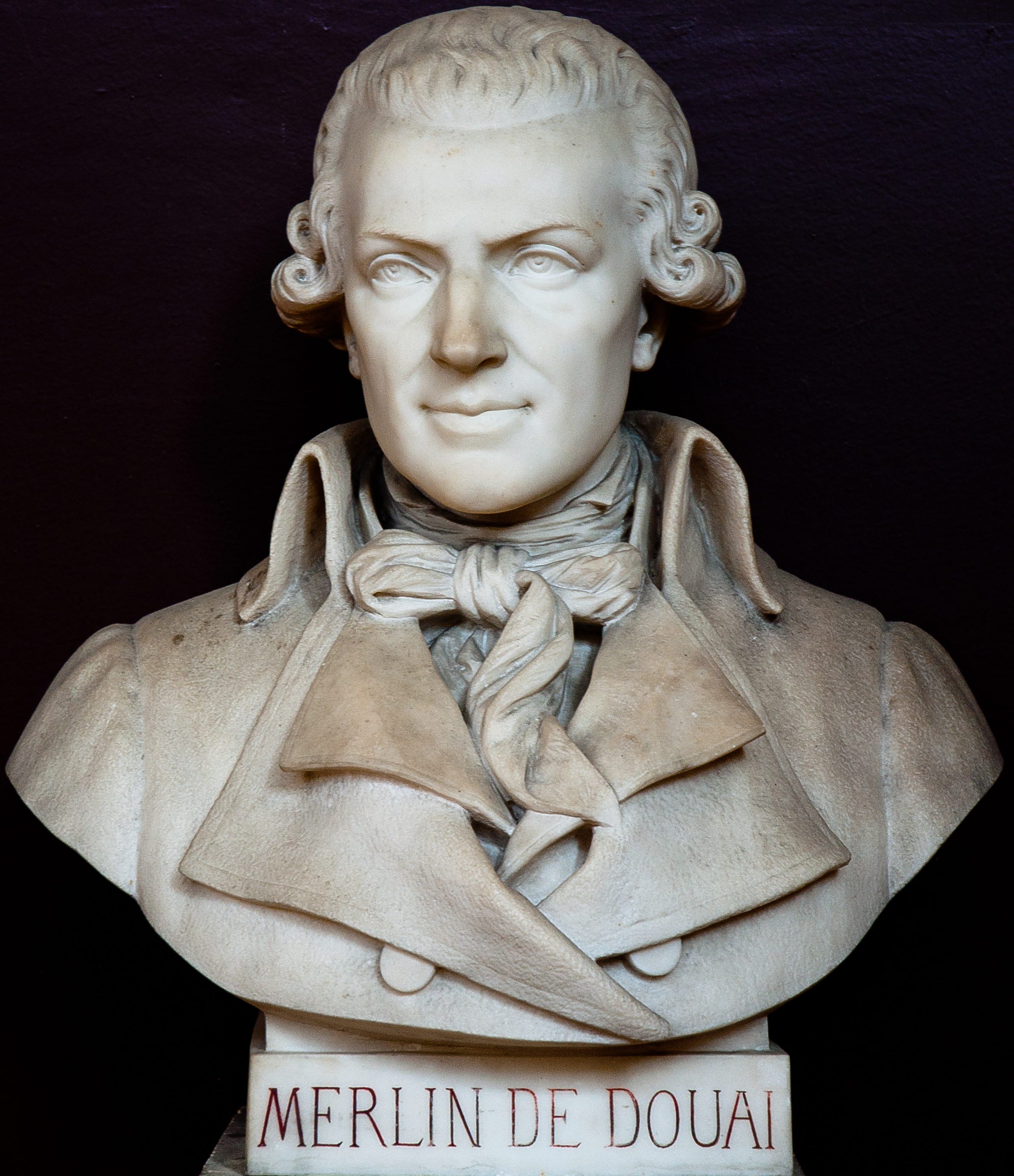
As a result, while naturalisation could follow a formal petition from a foreigner, “it may also be established by the power of the law alone, and without the assent of the foreigner. The sovereign, by the sole fact of being sovereign, can say: I wish that all those who inhabit my estates, be citizens; and once he has said this, none has the right to reply, I do not want to be a citizen, although I inhabit your estates”. The official position of the state was, in other words, that a person could be naturalised without their consent under French law. The will of the sovereign power trumped the individual will.
Whether or not they were able to appreciate it, Oshée and Macmahon bore witness to a transition in the nature of French nationality.
The grounds on which Oshée made his appeal to be seen by the state as French were common currency in contemporary thinking about the nation. Belonging to one nation as opposed to another was widely understood to depend principally on the will of the individual: since he had elected to be French, and proved his loyalty to his adopted nation through his military service, Oshée should be considered a Frenchman.
The unfortunate Macmahon, meanwhile, was condemned to be French by exactly the opposite principle. His own view regarding his nationality was irrelevant; it was the nation itself that determined who belonged to it, regardless of the individual’s will to be or not be French.
What changed between these dates? Throughout the 1790s, the revolutionary state was determined to maintain the unity of the French nation at any cost. In its more idealistic early stages, this meant willingly and gladly inducting into its ranks anyone who demonstrated sufficient enthusiasm for revolutionary principles.
Under the terms of the Constitution of 1793, which in the end was never ratified, to become a French national, a foreigner only had to have been living in France for one year, or otherwise have some form of family life in France: i.e., be married to a French person, have adopted a French child, or financially support an elderly person in France. In other words, some minimal investment in the future of the French nation was sufficient to prove one’s worth to be a citizen.
However, as the ideals of the Revolution curdled and the state became more paranoid, it increasingly policed the boundaries of the nation. This allowed it to exclude French groups who were considered to be disloyal to the revolutionary project, such as nobles and certain priests, while incorporating those who were potentially of strategic value to the nation, such as the entirety of Belgium.
One important inflection point in the rise of this state-centric conception of nationality was the abolition and then re-imposition of slavery. Slavery was officially abolished in law in January 1794, but by this point the enslaved people of the most important of the French colonies, Saint-Domingue, had already liberated themselves through an armed revolt, forcing the hand of the French authorities.
However, between 1802 and 1804, Napoleon I reimposed slavery on the colonies, and sent armies for this purpose to Saint-Domingue. They eventually met with defeat, and Saint-Domingue became the independent state of Haiti.
Yet the principle that the French state unilaterally transform almost a million people from slaves into citizens and then back from citizens into slaves provided an important legal precedent.
And indeed, under the Code civil introduced in 1804, the Napoleonic state required that all foreigners wishing to become French nationals first receive the approval of the government. And in 1809, Napoleon instituted a new, much more arbitrary and restrictive regime that required foreigners to petition him personally for naturalisation.
Aspects of these different regimes endure in the modern French process for naturalisation. A would-be citizen has to prove their will to belong to the French nation by living there for a fixed period of time (usually five years, although there are factors, such as earning a higher degree at a French university or serving in the Foreign Legion, that can bring this down) and learning a certain amount of French (this used to be just a B1 under the Common European Framework of Reference for Languages, CEFR, but under a new law introduced by Emmanuel Macron’s right-wing Interior Minister Gerald Darmanin in 2024, you now need a B2), and sitting a citizenship test.
However, this only entitles you to petition for citizenship; each individual request can be turned down at the discretion of the government. And academics such as Manlio Cinalli point out that in practice, citizenship is harder both to acquire and to exercise for racialised people in France, above all Muslims, who are treated as alien to its cultural traditions. It is also easier to strip citizenship from them: in fact, since 2020, 63 French people have been stripped of their citizenship, largely following charges of Islamist terrorism.
So while French citizenship might theoretically be theoretically a question of each person’s will to be French – what 19th-century thinker Ernest Renan called a “plebiscite de tous les jours”, in reality the state still maintains its jealous grip on the nation – dynamically determining for itself who should and should not belong to its civic community.