
Le Pen stands again
The RN's perennial candidate has decided to be perennial at least one last time

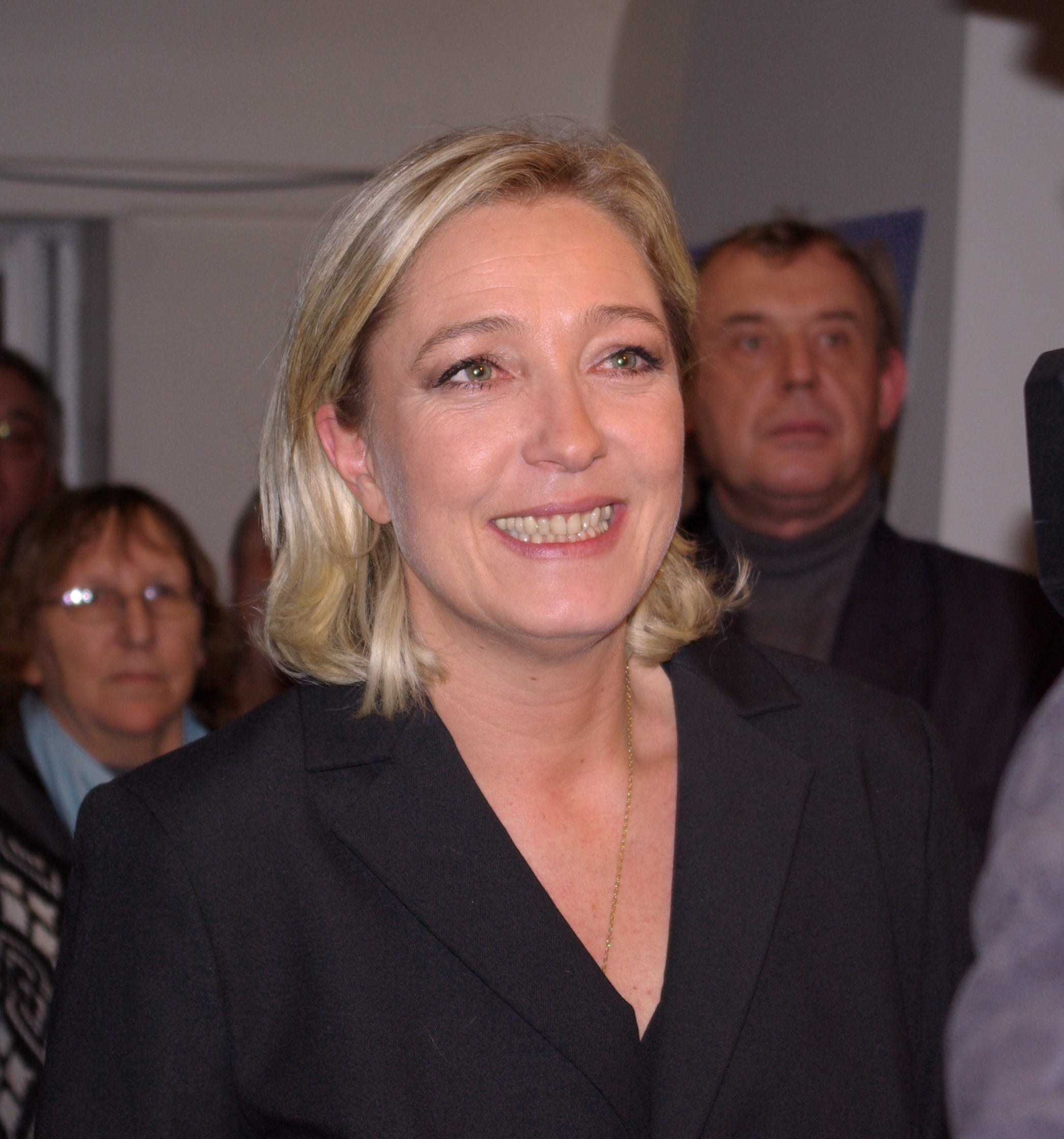
Convicted! On Tuesday, the Court of Appeal delivered a long-anticipated verdict in the legal case against Marine Le Pen.
It upheld her prior conviction, but reduced her sentence dramatically. From a political perspective, what really matters is that her period of ineligibility, in which she is not allowed to stand for election, has fallen to the minimum.
The maths is confusing, but she is formally barred from standing for 45 months, with 30 of those months suspended. That means she is in effect only ineligible for 15 months. Additionally, however, the count began from the moment the judgement against her was first delivered, in March 2025.
The upshot of which is that she will be able to stand in the 2027 presidential election, due in April. She has duly announced that she will be the candidate for the far-right Rassemblement national.
A quick recap, this all started because Le Pen, a number of her colleagues, and her party as a whole were accused and then convicted of having diverted funds allocated to them by the European Parliament to the national party in France.
In France, such crimes often carry a penalty of ineligibility, which bars the convicted party from standing for election. This is a legacy of the French Revolution, in which period citizens convicted of certain crimes could lose not only the right to stand, but the right to vote for a fixed period.
For Le Pen, however, the risk was not only that she would be ruled ineligible. It was that she would be condemned to house arrest and forced to wear an electronic tag.
Wearers of such tags are not banned from leaving their homes in any circumstances, but they do have to request permission to do so, and they are often subjected to a curfew.
That is clearly not compatible with running a political campaign, in which a candidate has to bob and weave around the country, attending events in different places every day.
As such, Le Pen had always maintained that if she was required to wear a tag, she would not stand in the election, even if she were eligible.
In the event, the Court of Appeal did indeed order that she be placed under house arrest and forced to wear the tag. And that has created a sticky political mess from which she now hopes to profit.
In delivering its verdict, it declared that it was obliged to respect the civic freedom to stand in elections and also the voters’ right to make a free choice, “a condition of the expression of democratic suffrage”.
All fine and noble, but since that was accompanied by the electronic tag order, to her sympathisers it just looks like a stitch-up: i.e. the state will allow her to stand, but put its thumb on the scale to ensure she loses.
If she drops out because she does not think she can win while wearing a tag, it looks like her own choice, not the political establishment barring her from standing. If she stands and loses because she is effectively prevented from campaigning, the establishment can say the voters have rejected her.
And so this plays right into Marine le Pen’s hands. She has long presented herself as a political martyr. Now the verdict seems to prove it: the full force of the state rustling up some convoluted chicanery to stop her from winning.
The decision also left her an escape route. The Court of Appeal is outranked by another court: the Court of Cassation, the highest judicial body in the country (and, incidentally, another legacy of the Revolution).
Le Pen always had the option to take her case there if the Court of Appeal ruled against her. Previously, she insisted that she would not do this, arguing that it would hobble her party’s chances if a judicial case were hovering over her candidacy.
However, the fact that she has been ruled eligible has emboldened her to break that resolution, in the confidence that they will not reimpose the bar on her standing.
Most of all, this buys her time. For as long as the case is still being heard, her sentence will not come into effect, meaning that for now, she is free of the tag.
Her strategy is not without its risks. The Court of Cassation has indicated that it will deliver a verdict before the 2027 election. If it upholds the sentence imposed by the Court of Appeal, she will have to spend the last and most vital portion of the campaign wearing the tag – a big drag on her ability to campaign effectively.

But it is a risk worth taking. After all, mournful images of her confined to her home by a vindictive state, forced to hold rallies over Zoom, would only cement her martyr status.
There is already some evidence that this episode has burnished her image. A new poll has put her on 36% of first-round votes, the highest score her party has ever recorded.
Nonetheless, even if she is currently riding high, the whole episode points to a number of hairline fractures in the ground beneath her.
Le Pen is not standing solely because the Court of Appeal has inadvertently given her both a free run and a compelling argument, but because she has been compelled to retake the reins of her party.
The long uncertainty about her candidacy has allowed her second-in-command, Jordan Bardella, to expand his public standing and his following in the party base, in case he should be needed for a Plan B run.
On some key points he has even broken with Le Pen’s own line – previously unthinkable in a party run according to the principle of l’esprit de chef, essentially an internal dictatorship. He often polls higher than Le Pen and receives a more enthusiastic reception at rallies.
Since the party’s upper echelons remain firmly loyal to Le Pen, he was never going to challenge her if she chose to stand. But had she sat out this election, he would have become the party’s most prominent face.
Whatever the result, there is a good chance he would have wrested control of the party from her sooner or later.
That meant that realistically, she had to stand if there were any possibility of doing so. But she has declared her candidacy in circumstances that are less than auspicious.
Certainly, she is far ahead in the first round, looking almost certain to score 35%. But to win the election as a whole, she needs to get above 50% in the second round.
Right now, polling suggests she would win handsomely against just one candidate: Jean-Luc Mélenchon. But Mélenchon is unlikely to be her opponent. It is far more probable that she will face Édouard Philippe.
Currently, polls put the two neck-and-neck. However, that is misleading: plenty of people on the left will tell pollsters at this distance from the vote that they would sit out such a contest, because that is easy to say for as long as it remains hypothetical.
When the very real prospect of a Le Pen presidency looms next April, that will no doubt focus minds. Most will, however reluctantly, turn out once again to support a centre-right candidate instead of the end of the Republic.
Which is not to say she is certain to lose. There is no question that this is the closest the RN has ever been to the Élysée. Le Pen might prove she now has sufficient appeal to the mainstream that she can hit 50% in the second round.
Or a high rate of abstention on a left weary of being expected to act as the rearguard of the Republic could also gift it to her.
Equally, Philippe, who is under a judicial investigation of his own, may yet bottle it and leave open the path to power.
But if she does lose, as seems more probable, it will be her fourth presidential defeat, in an election that was supposed to be winnable – supposed to be the RN’s best ever chance at power.
Many in her party, for all that they appreciate what she has done to turn their movement from political pariah to dominant force, will begin to question whether she is capable of carrying it over the finish line.
They may instead turn to Bardella to be their standard-bearer: a fresh face, without any personal link to the party’s fascist past, who will have kept his powder dry in this election and maintained a loyal façade.
In sum, Le Pen may have got her fingertips back on the presidency, but if she fails to transform that into a proper grip, this could be the beginning of the end of her political ambitions.